Agencies, allies, and mission partners rarely run the same systems. Connect with them anyway, on one
platform for messaging, voice, video, and governed AI. Controlled entirely by you.


.avif)
%201.svg)



Across the US, NATO, and Europe, the mandate is the same: connect systems
that were never built to work together, securely and under your control.
Connecting every command system across services and allies is now a defense requirement, not a nice-to-have.
Federated Mission Networking sets how
allies interoperate, with XMPP at its
core.
European defense ministries want critical comms, data, and keys under their own control, while staying interoperable with allies.
When your partners run different systems and your assessor wants proof, Rocket.Chat is:
Interoperable by design: Native XMPP and Matrix federation, and a bridge to Microsoft Teams, so partners connect without context switching.
Governed by you: Self-hosted, air-gapped, or sovereign cloud. Your infrastructure, your policy.
Zero Trust, enforced: Access decided by attribute (ABAC), request by request, marked with classification banners, and every decision logged.
Procurement-ready: Available through US, NATO, and European frameworks and trusted partners.
Visit our Trust Center for verified security and compliance insights →


.png)



Connect any partner without switching, keep every conversation governed, and stay online through disruption, all on the stack you already run.
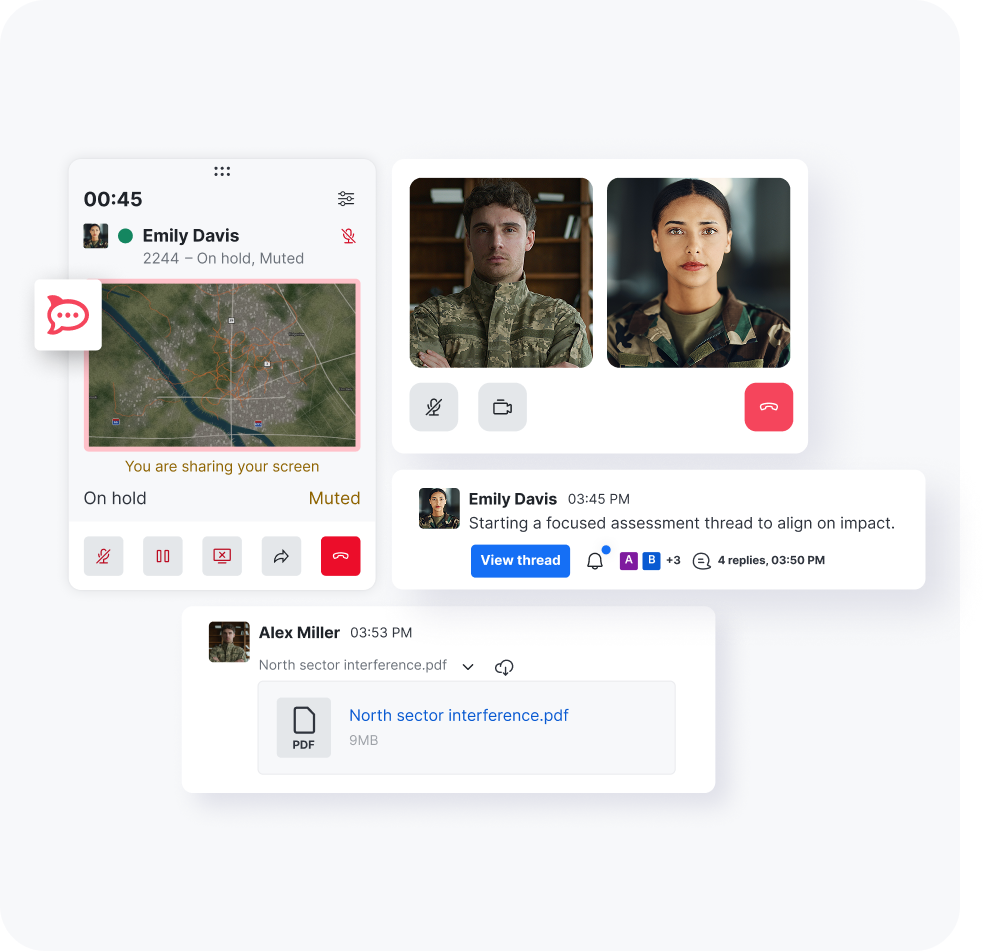
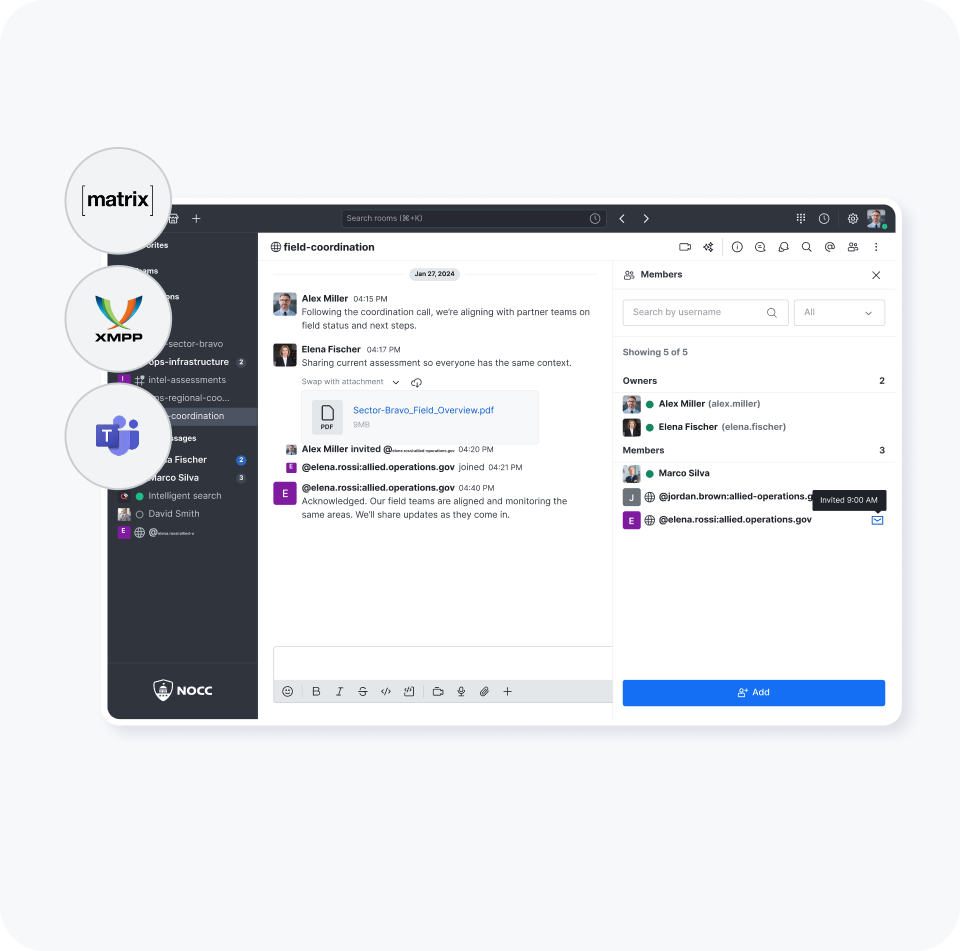
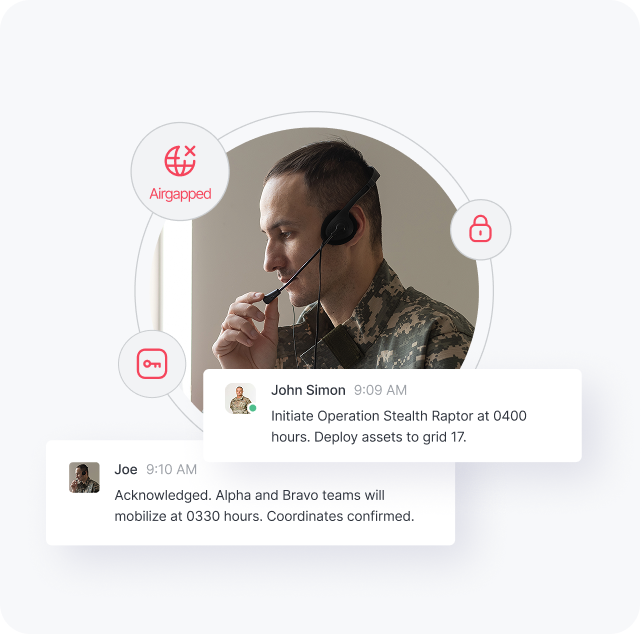
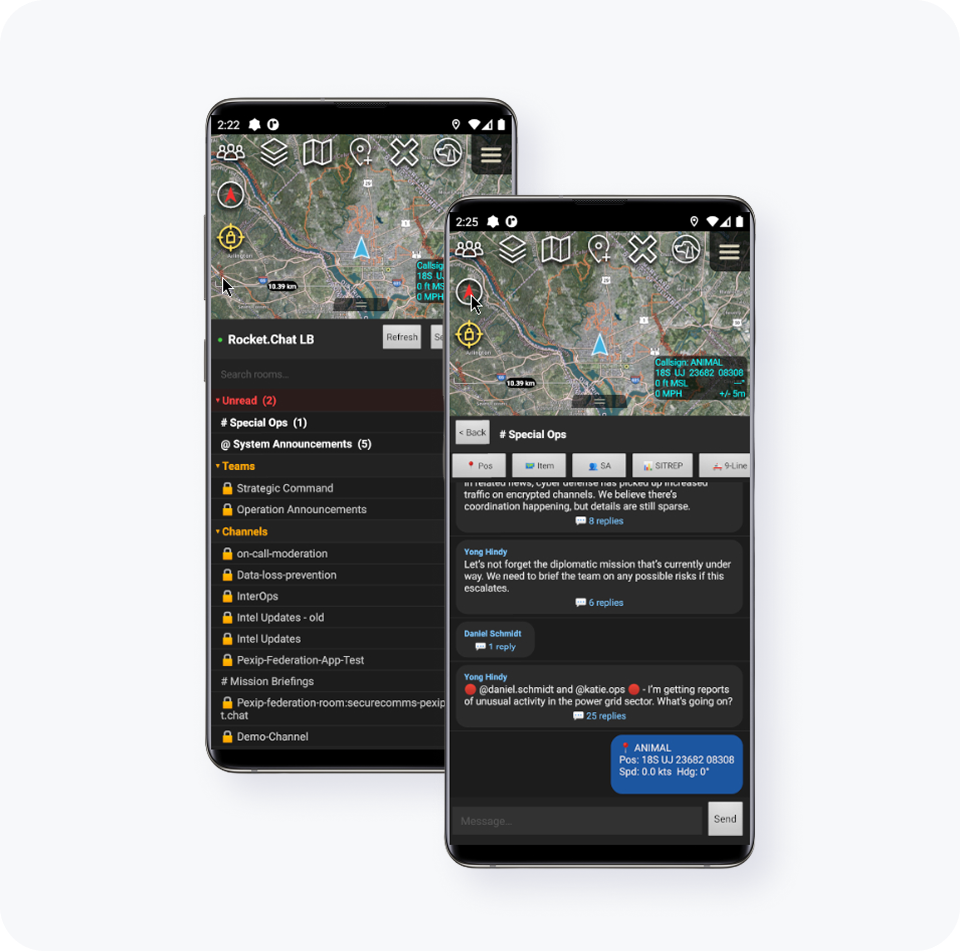
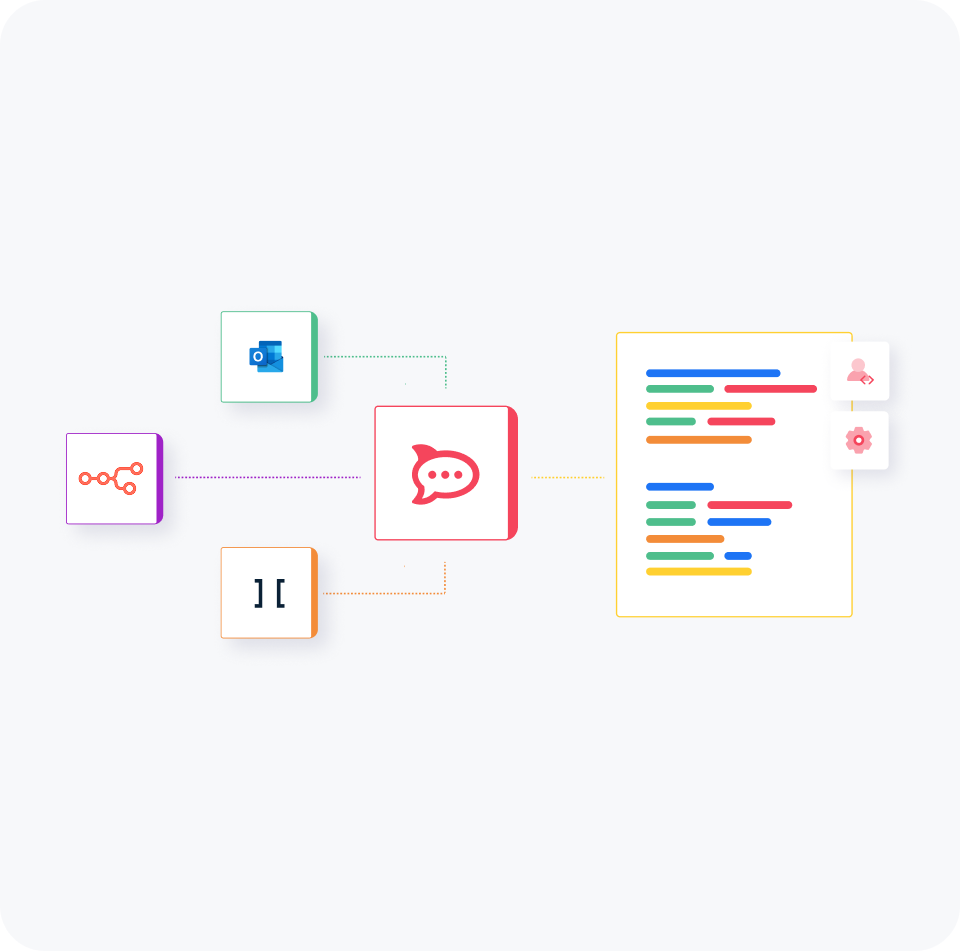
Powering federated, sovereign, and auditable defense operations.
National networks, NATO mission networks, air-gapped, sovereign cloud, or on-premises.
Clearance, nationality, and program, continuously evaluated request by request.
Decision-level logs with user, channel, attributes, decision, and timestamp.
Defeats harvest-now, decrypt-later collection. Aligned to CNSA 2.0 and ETSI guidance.
Federate natively across Matrix and XMPP, the protocols coalitions run on.
Build governed custom apps on our REST APIs and SDKs, and connect systems like TAK Server and ATAK.
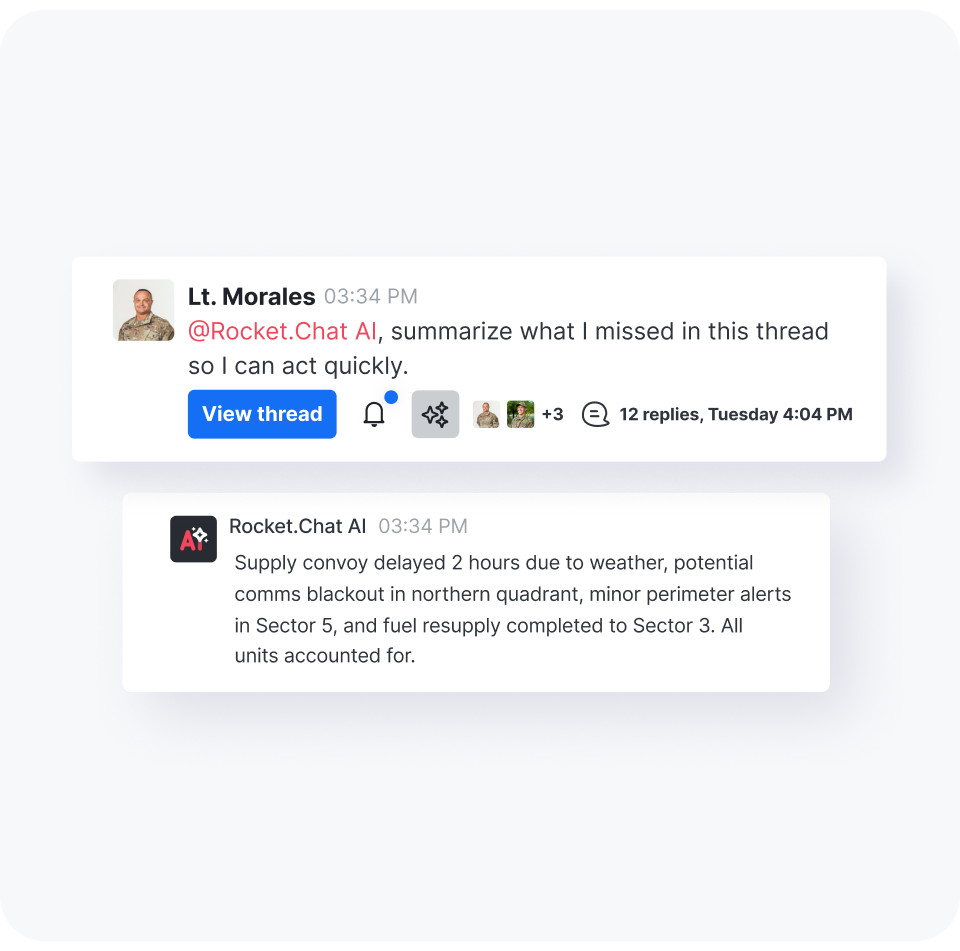
Rocket.Chat AI runs on the model you choose, inside your own infrastructure, so nothing leaves your perimeter and every answer stays scoped to the user's clearance and attributes.
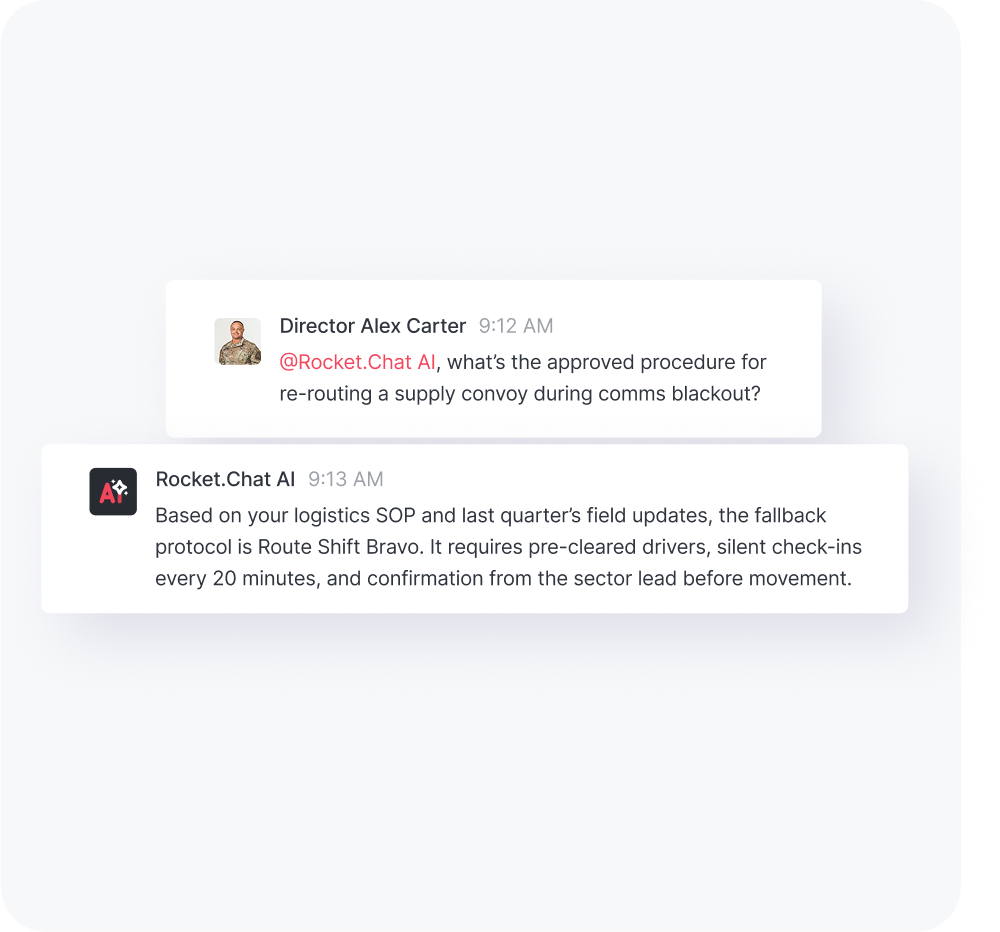
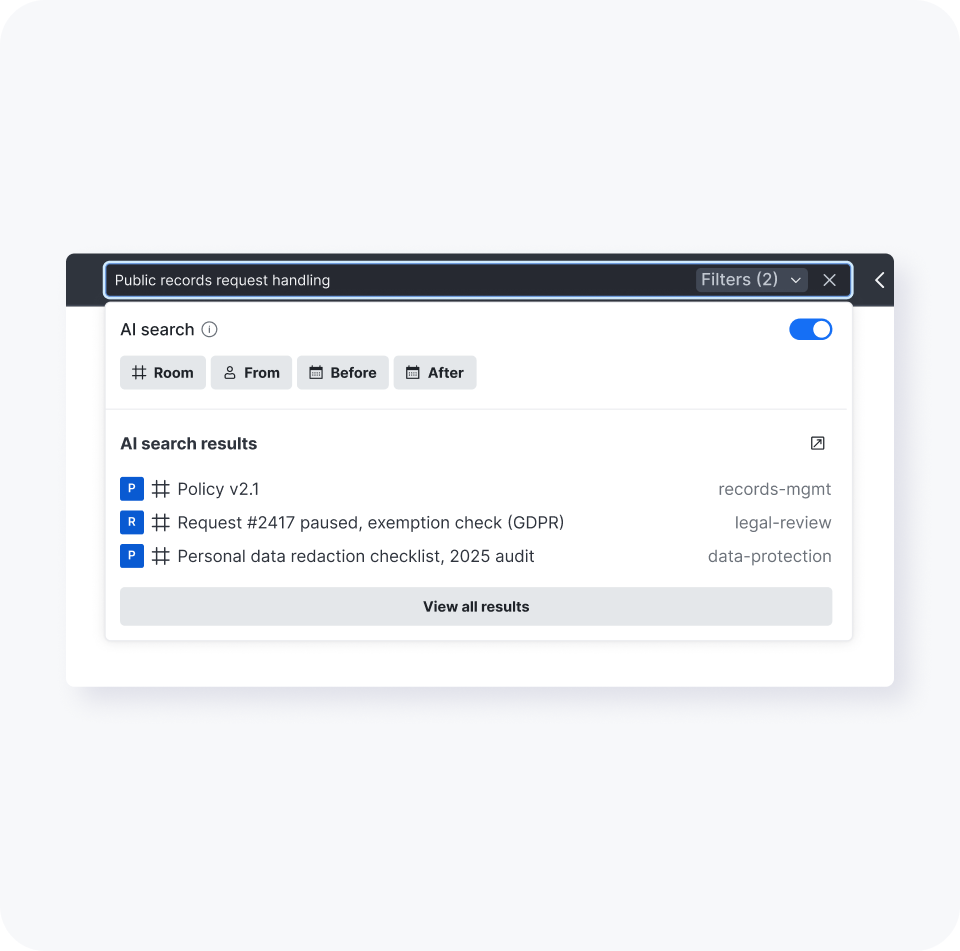
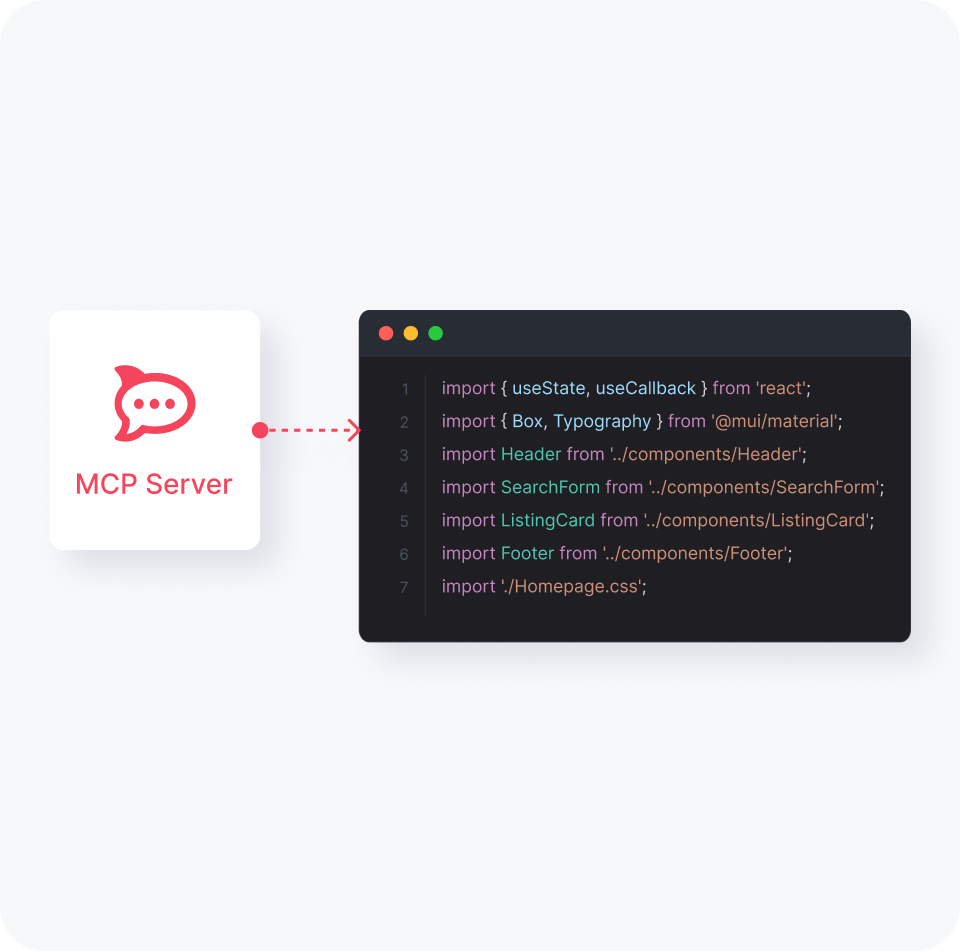
.png)
NIST 800-207 and the DoD Zero Trust Strategy in the US, NATO's Zero Trust and data-centric security direction, and national frameworks such as BSI IT-Grundschutz and NCSC Secure by Design in Europe. It supports the DoD's FY2027 Zero Trust target and NATO's drive to a multi-domain-enabled Alliance by 2030.
Access verified on every request against your identity provider, not once at login.
Decision-level audit logs an accreditor can read: user, channel, attributes, decision, and timestamp.
Fail-secure by default. A user without the required attributes cannot be added or stay.
High-availability and continuity-ready deployment keeps communications running through an outage, cyberattack, or crisis.
Available through systems integrators, defense contractors, and public sector partners globaly.
Procure through government-wide vehicles like GSA, SEWP, and GWACs, plus existing IDIQs and BPAs.
Buy through global and national defense marketplaces, including Platform One, Tradewinds, and AWS Marketplace for the Intelligence Community.
Delivered through our partners' existing framework agreements.
Globaly deployed by certified integrators and regional partners, on sovereign or national cloud, or on-premises.

Here’s what our customers and partners have to say
.png)


• The insights and data points across this page are informed by the following key sources: Federal CIO Council & DHS: "State of Federal IT"
report (2023), Gartner: Shadow IT impacts on enterprise security (2022), GAO: Interagency communication breakdowns and response delays
(2021), OMB: Federal incident response times and breach likelihood analysis (2022)