


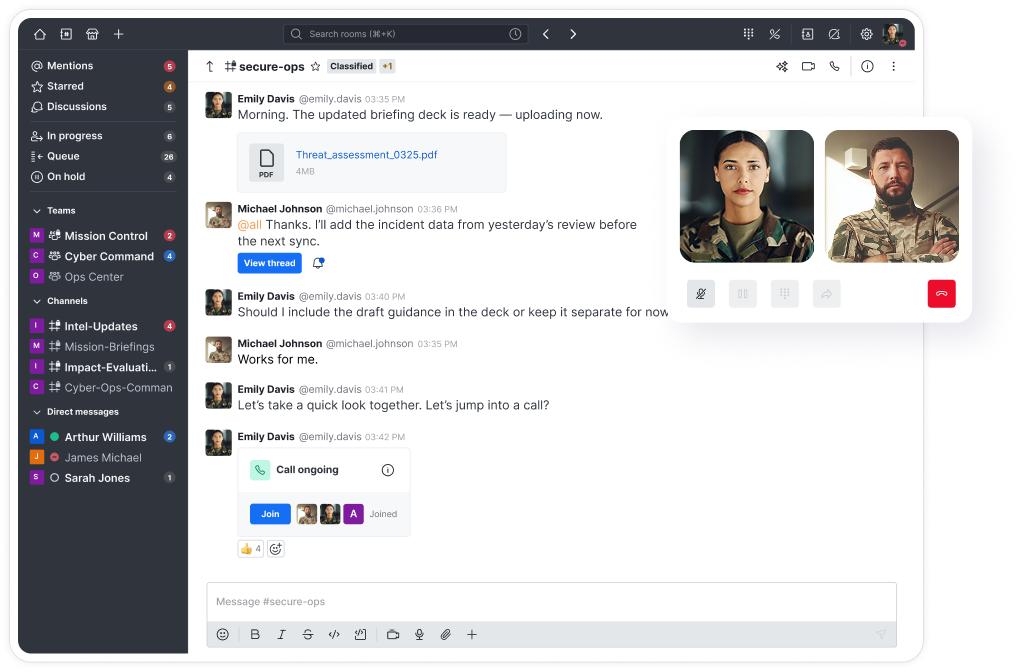





Six reasons classified programs keep choosing Rocket.Chat
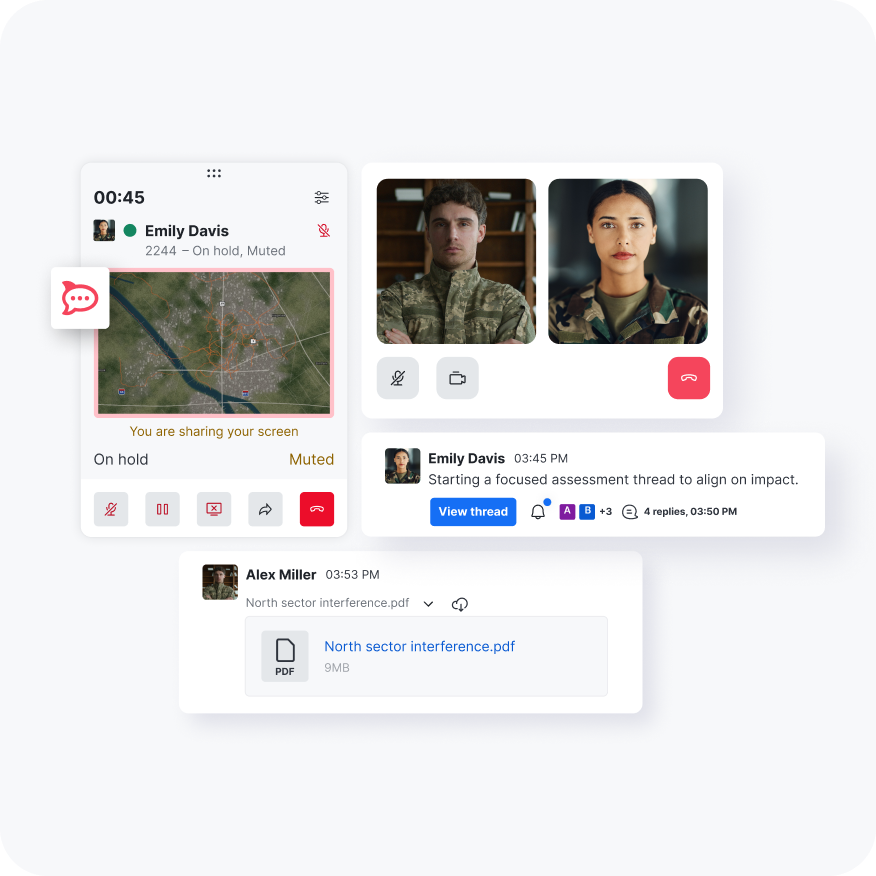
Unified communications, deployable anywhere
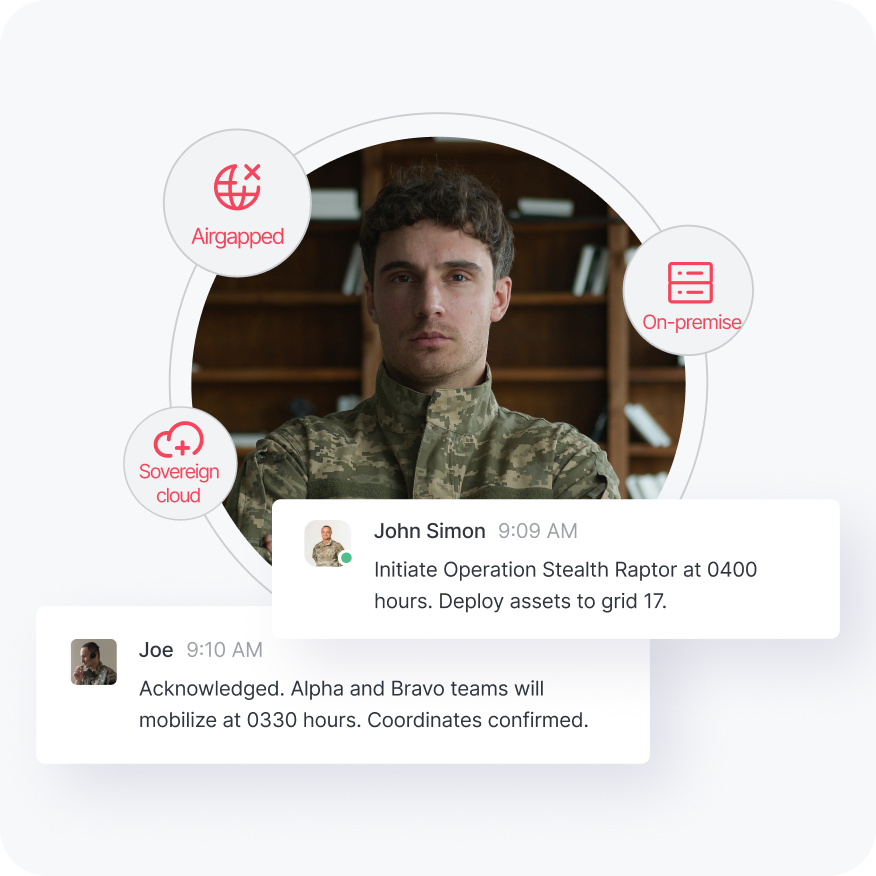
Self-hosted, air-gapped, or sovereign cloud, entirely under your control
Pexip for secure video on your own Infinity server, at the same classification
No second boundary to accredit for video
One platform instead of a stack you assemble yourself
Zero Trust and
post-quantum
Access verified continuously, rather than once at login
Decision-level audit logs: user, channel, attributes, decision, timestamp
Fail-secure by default, so a user without the required attributes cannot be added or stay
Aligned to NIST SP 800-207, SP 800-162, and CNSA 2.0
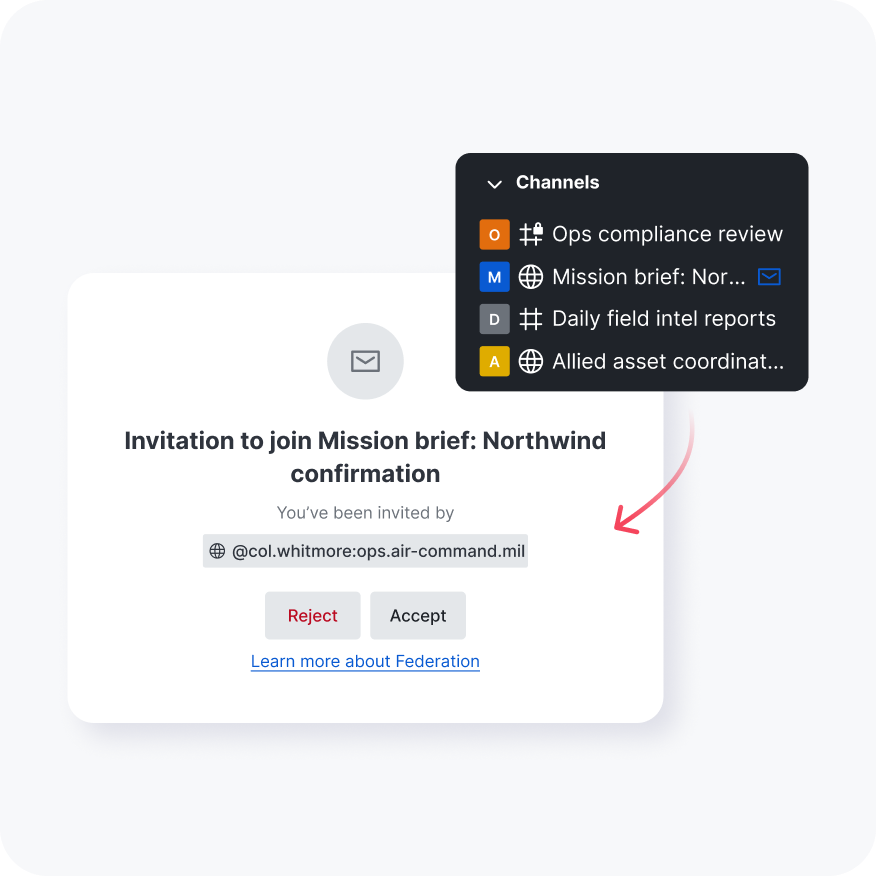
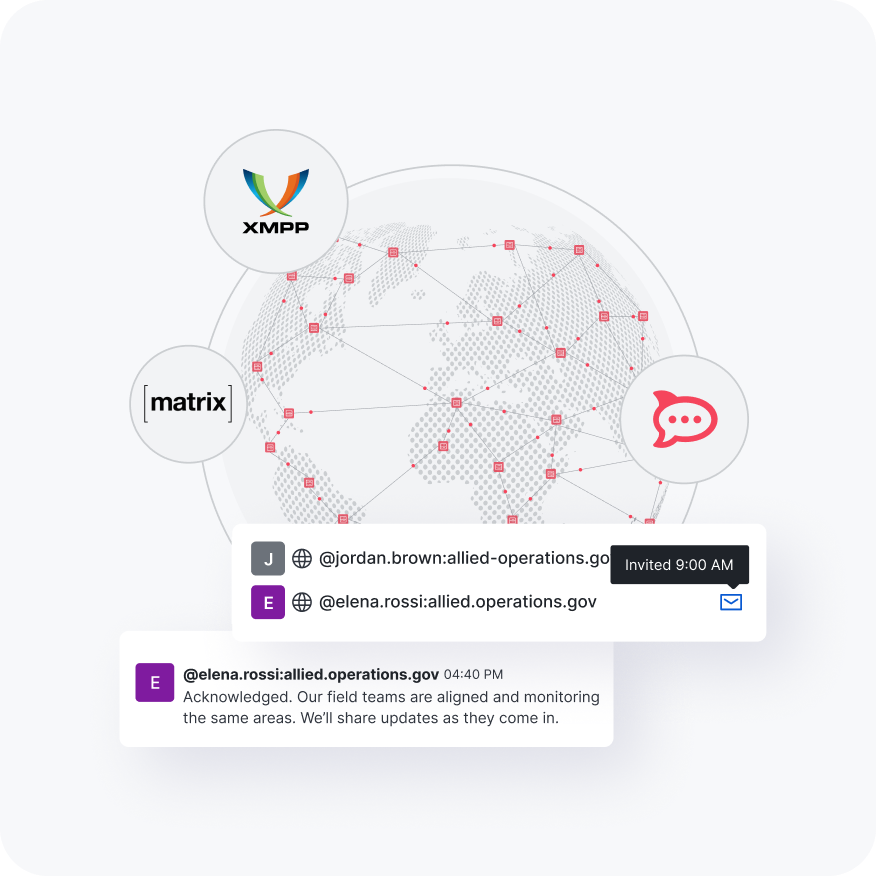
Protocol driven and agnostic
Native homeservers for both protocols, server to server, with nothing in between to accredit
Identity and attribution preserved end to end, so every message ties to a real person
Bridges reach proprietary platforms like Microsoft Teams, and others such as IRC
One accreditation scope, however many protocols you speak
Resilient at the tactical edge
Operates under DDIL conditions, from headquarters to the tactical edge
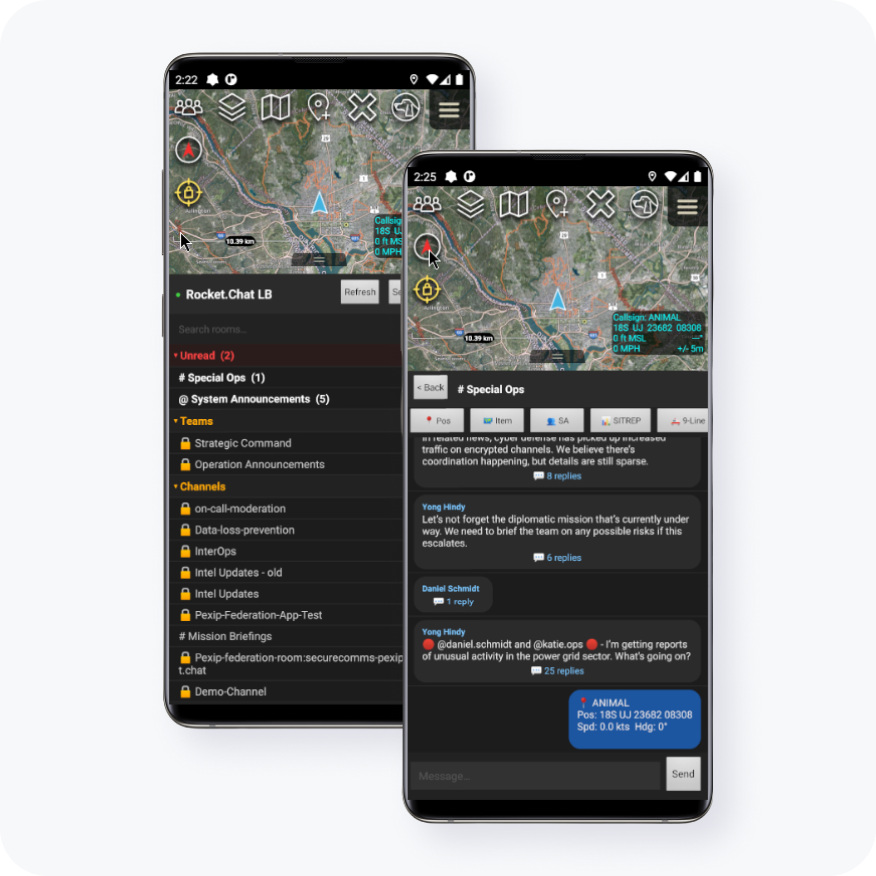
Integrated with mission systems including TAK Server and ATAK
Runs on government-issued and personal devices under your access policy
Extend it through the REST API, SDKs, and Apps Engine
Continuity of operations
Self-hosted or air-gapped deployment, with updates and patches that arrive offline
Redundant high-availability architecture
Secure fallback channels through an outage, cyberattack, or crisis
Runs without calling home to stay licensed
AI that works inside your perimeter
Answers from your own records, on the models you choose, inside your perimeter.
Summarize threads and translate in seconds, so allies and agencies share one picture.
Answers drawn only from what each person is cleared to see.
Approved agents, bound to each user's identity and access. You stay in command.
See why mission-critical organizations
choose Secure CommsOS®
funded by the U.S. DHS
Have questions?
Here's what we often hear
