

Deliver a Collaborative Working Environment (CWE) that supports policy delivery, operational coordination,
and secure information sharing across departments, partners, and coalition stakeholders.
.avif)



.avif)


Classified teams across the UK need CWEs that are secure, sovereign and interoperable, supporting cross-government delivery, MOD operations and coalition information sharing.
UK organizations are transitioning away
from US cloud providers to strengthen
sovereign control.
cyber attacks targeted MOD networks
over the past two years.
UK central government systems are
legacy, limiting resilience and visibility.
Used where policy, architecture or operational risk constrain standard platforms.
Operate in restricted or degraded networks, including air-gapped scenarios.
Support cross-agency and coalition operations without collapsing boundaries.
Enforce policy-driven access by programme, partner or sensitivity.
Enable out-of-band and incident communications when primary systems fail.
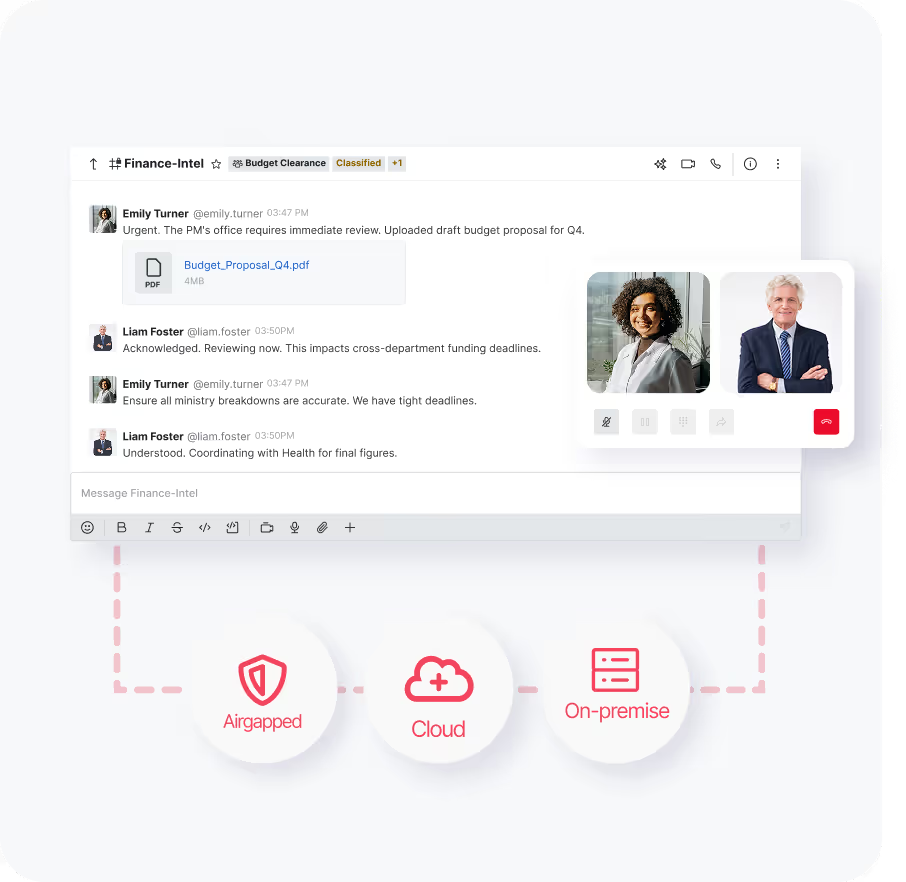
Collaboration designed for high-assurance environments where policy,
architecture, or operational risk constrain standard platforms.
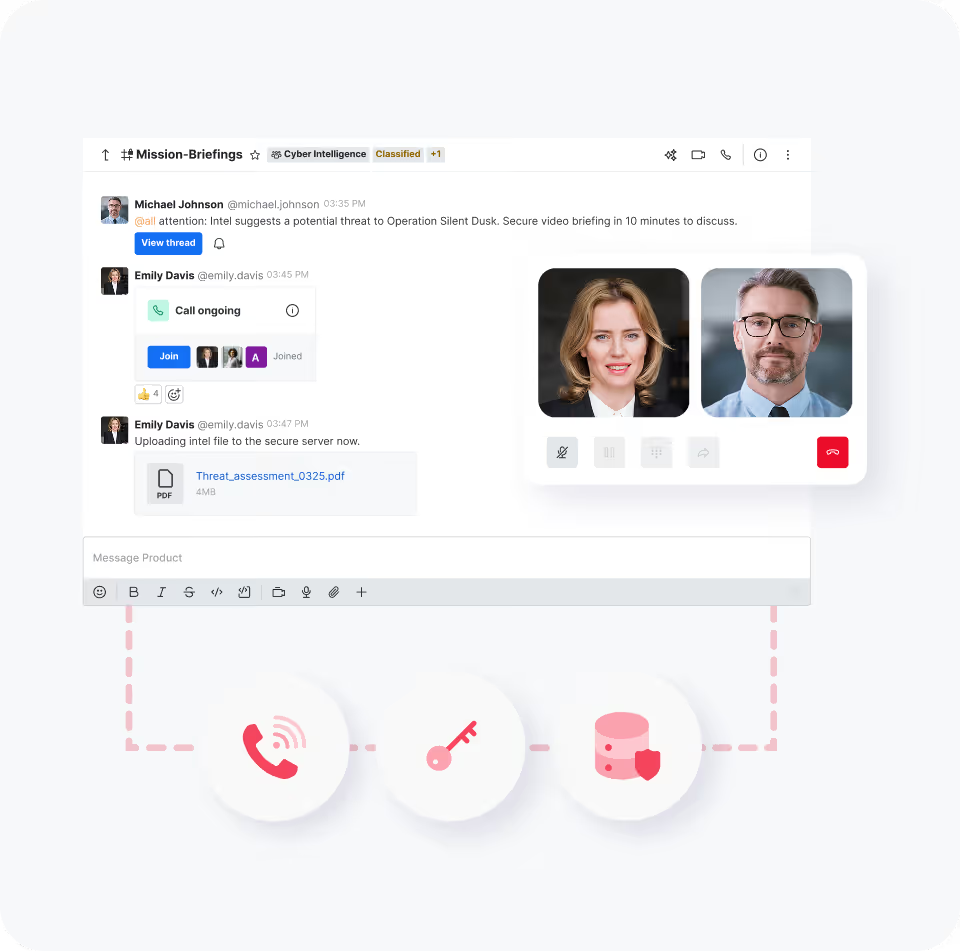
From local councils to national operations, Rocket.Chat keeps conversations secure, data under UK control,
and critical teams connected—across networks and organisations.
.avif)
Coordinate decisions, briefings and approvals across departments with controlled access, auditability and policy-based retention.
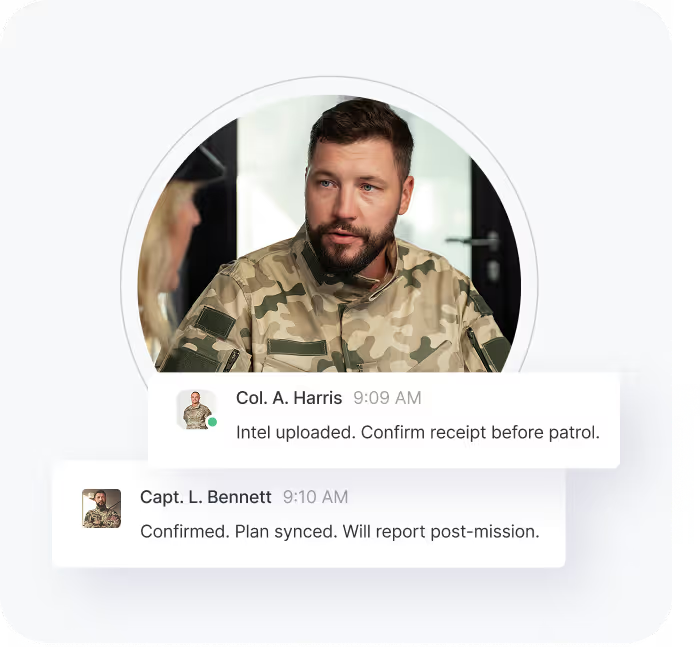
Connect MOD command, deployed units and partners using governed channels and federation, even in restricted or air-gapped environments.
.avif)
Stand up rapid, auditable operational rooms for law enforcement and public safety teams to share situational awareness across agencies.
Rocket.Chat is engineered for environments where collaboration must be resilient, controlled and interoperable.
Enforce RBAC and ABAC with identity integration and separation of duties, controlling access by role, programme or sensitivity.
Maintain auditable records across messages, files and admin actions to support oversight, assurance and investigation.
Share information across organisations using explicit policies that define what can be shared and under which conditions.
Integrate mission systems using APIs and apps, extending collaboration without disrupting existing platforms.
Apply retention, moderation, export controls and operational holds aligned to departmental policy and handling rules.
Deploy multi-instance or microservices architectures for availability in restricted, degraded or high-demand environments.
Rocket.Chat supports the security and assurance expectations common to UK government, defence and CNI environments.
.avif)
A UK central government department responsible for national security, borders and law enforcement adopted Rocket.Chat on AWS to support teams handling highly sensitive data, including information classified as OFFICIAL-SENSITIVE.
This enabled secure messaging and link sharing around core operational systems, maintained data sovereignty, and provided a policy-aligned alternative for high-assurance collaboration where standard platforms could not be used.
This reference is anonymised at the customer’s request.
.avif)

Rocket.Chat can be procured through routes that fit UK public sector commercial and delivery models.
Direct procurement for licensing and support.
Partner-led delivery through system integrators and specialist secure collaboration providers.
Procurement support pack available to streamline security, architecture and governance review (e.g., DPIA inputs, security documentation, deployment patterns, support model and commercial structure).