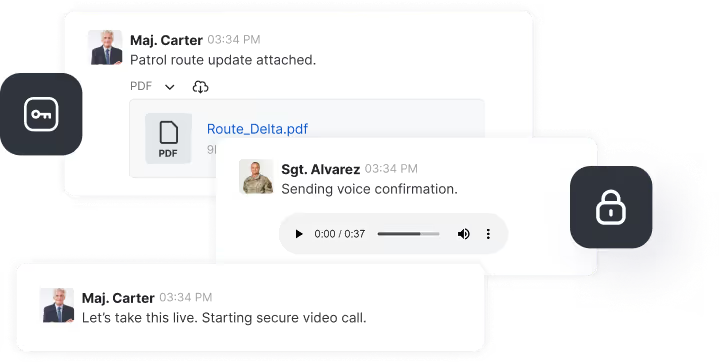
Modern defense communication systems are critical infrastructure that enable military forces to operate effectively across all domains. This comprehensive guide explores the five essential features every defense communication system must have: secure messaging with end-to-end encryption, real-time data sharing with low latency, interoperability and multi-domain integration, redundancy and resilience, and scalability with future-proof technology.
Learn how these capabilities address current challenges, including the 97% connectivity loss rate experienced by military personnel, and discover implementation strategies backed by industry statistics showing the global defense communication market reaching $102.4 billion by 2032.
Defense communication systems form the backbone of military operations, ensuring decision-makers and personnel remain connected during critical missions. However, modern military forces face unprecedented challenges in maintaining secure, reliable communications across land, sea, air, space, and cyber domains.
According to research, 97% of military personnel experience connectivity loss at some point during operations. This statistic highlights a critical vulnerability that can compromise mission success and personnel safety.
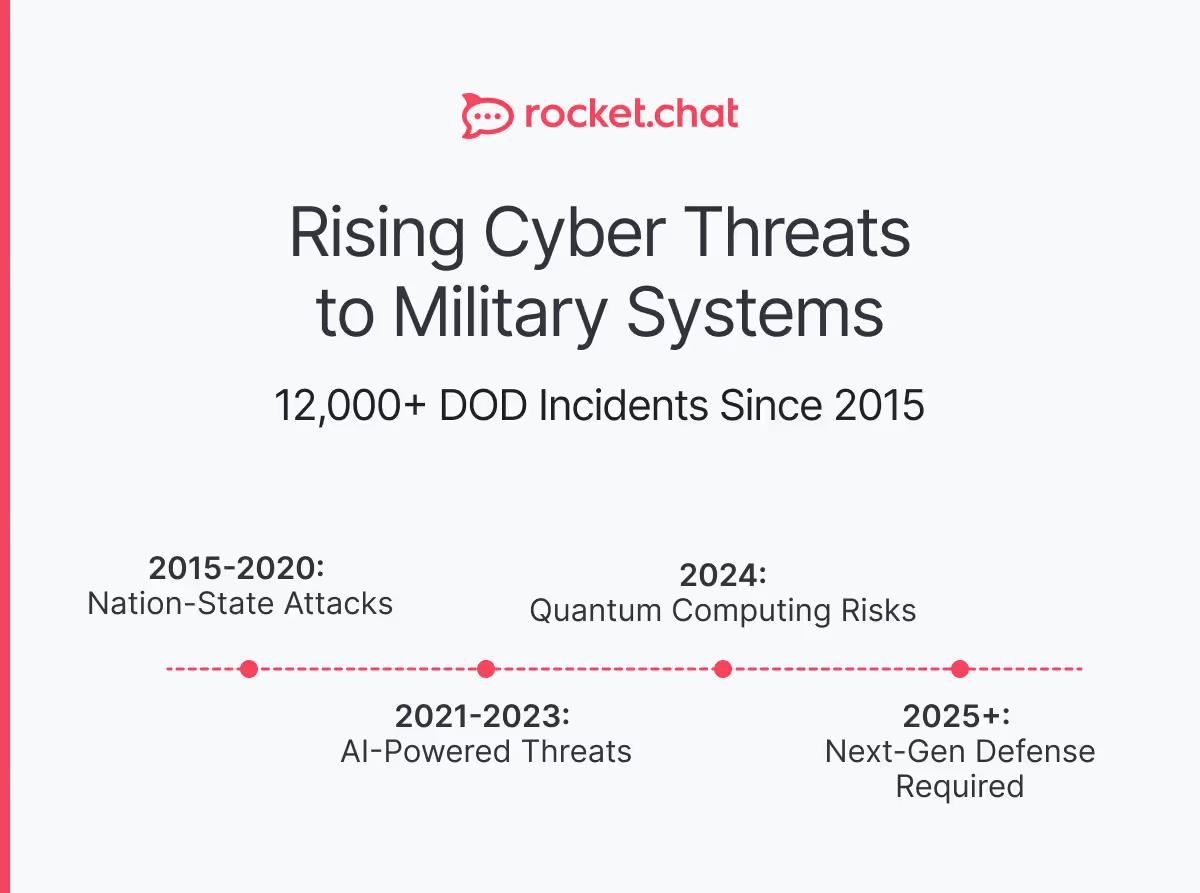
Modern military operations require resilient communication systems, yet threats like cyberattacks, electronic warfare, and challenging terrains create significant obstacles. The U.S. Department of Defense has reported over 12,000 cyber incidents affecting its systems since 2015, demonstrating the urgent need for advanced security measures.
The financial stakes are equally substantial. The U.S. Army spent $17 billion on the failed Joint Tactical Radio System (JTRS) program, then allocated $11 billion more for older radios during the Iraq and Afghanistan wars. These examples underscore the importance of implementing the right features from the start.
The global defense communication system market reflects this growing priority, projected to expand from $46.7 billion in 2024 to $102.4 billion by 2032, representing a compound annual growth rate of 10.3%.
This growth is driven by increasing demand for secure networks, integration of emerging technologies like 5G and AI, and rising defense modernization programs worldwide.
This article explores the five essential elements every defense communication system must have to address these challenges and ensure operational success.

According to the second annual State of Military Communications study, 97% of military personnel experience connectivity loss at some point.
Modern military operations across land, sea, air, space, and cyberspace require resilient communication systems, but threats like cyberattacks, electronic warfare, and tough terrains make this a challenge.
The U.S. Army spent $17 billion on the failed Joint Tactical Radio System (JTRS) program, then had to allocate $11 billion more for older radios during the Iraq and Afghanistan wars.
This article explores the five essential elements that every defense communication system must have to address these challenges.
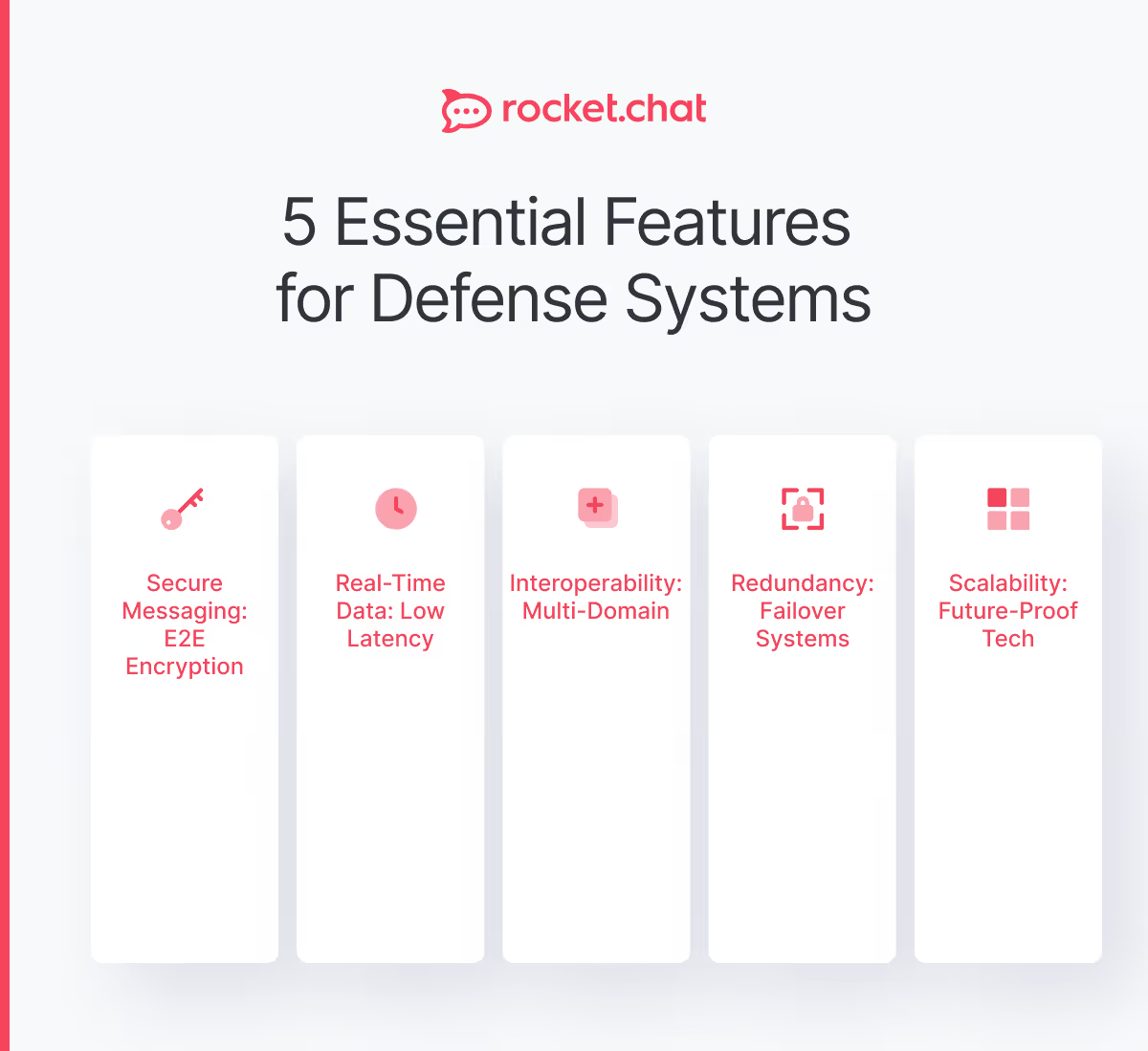
5 essential features every modern defense communication system must have
Defense organizations need specific capabilities to maintain secure, reliable communications in complex operational environments. These five features represent the foundation of effective military communications.
1. Secure messaging and end-to-end encryption
Defense communication systems must encrypt all communications to prevent enemy interception and unauthorized access. This requires protecting data both at rest and in transit using advanced cryptographic methods that meet military-grade standards.
Why security matters in defense communications
Sensitive information must remain confidential, even in compromised environments where adversaries actively attempt to intercept transmissions. A single breach can compromise operational security, endanger personnel, and reveal strategic intentions to hostile forces.
During the 2011 operation to capture Osama bin Laden, secure communication channels proved essential to prevent leaks and ensure mission success. The operation demonstrated how proper encryption and secure collaboration tools enable forces to coordinate complex missions without detection.
Modern encrypted messaging apps have evolved beyond simple text protection to include comprehensive security features including authentication, access controls, and compliance with defense standards.
Tools for secure military communications
Several platforms provide the encryption capabilities defense organizations require:
- Rocket.Chat: Provides military-grade encryption and secure messaging for distributed teams, with deployment options including on-premises, cloud, or air-gapped collaboration environments. The platform supports government messaging apps with end-to-end encryption and complete data sovereignty.
- Signal: Known for strong encryption and decentralized communication, making interception or decryption extremely difficult for adversaries attempting to compromise communications.
- HighSide: Designed specifically for defense environments, ensuring confidentiality of sensitive data through encrypted file sharing and secure collaboration capabilities.
2. Real-time data sharing and low latency
Instant data exchange enables faster decision-making, ensuring critical information reaches commanders and personnel without delay. This capability requires networks with high bandwidth and low latency capable of handling massive data volumes across distributed operations.
The operational impact of communication latency
Communication delays can cause mission failures, increased risks, and operational inefficiencies that compromise force effectiveness. In modern warfare, where decisions must be made in seconds, latency measured in minutes can prove catastrophic.
During the 2003 invasion of Iraq, real-time data sharing enabled coalition forces to coordinate effectively and respond swiftly to emerging threats. The ability to transmit intelligence, target coordinates, and situational updates without delay proved decisive in achieving operational objectives.
Today's mission-critical communications systems must support multimedia content including video feeds, sensor data, and high-resolution imagery while maintaining minimal latency.

Implementing low-latency communication systems
Modern platforms enable real-time coordination:
- AWS IoT Core: Enables real-time IoT-based communication and situational awareness, allowing defense forces to monitor and respond to dynamic battlefield conditions with sensor networks and connected devices.
- Cisco Catalyst Wireless: Guarantees seamless connectivity and low-latency communication essential for maintaining real-time situational awareness and coordination across distributed forces.
3. Interoperability and multi-domain integration
Modern defense communication systems must integrate seamlessly with other platforms across air, land, sea, space, and cyber domains. This requires compatibility through standardized protocols and interfaces that enable different systems to exchange information effectively.
Why interoperability defines operational success
Effective coordination between different military branches, allied forces, and partner nations depends on systems that can communicate regardless of manufacturer, deployment environment, or technical specifications.
NATO operations demonstrate how interoperability between member nations' communication systems enables unified command and control. The alliance conducts annual exercises like Coalition Warrior Interoperability eXploration (CWIX), bringing together over 2,700 operators from more than 40 nations to stress-test digital systems and ensure compatibility.
Technical interoperability alone isn't sufficient. Forces must also align doctrine, training, procedures, and culture to ensure coherent, effective, and efficient joint operations. This human element of interoperability often proves as challenging as the technical aspects.
Solutions for cross-platform integration
Integration platforms support multi-domain operations:
- Mattermost: Open-source platform enabling integration with defense applications, allowing seamless communication across different systems and workplace team communication tools.
- Palantir Foundry: Offers centralized data integration for defense operations, ensuring information from various domains remains accessible and actionable for decision-makers.
4. Redundancy and resilience
Defense communication systems must include backup communication channels and fail-safe mechanisms to ensure continuity during disruptions. This involves redundant networks and alternative communication methods that activate automatically when primary systems fail.
Building resilient military networks
Communication breakdowns during emergencies, natural disasters, or cyberattacks can paralyze operations and endanger personnel. Redundant systems ensure forces maintain connectivity even when adversaries specifically target communication infrastructure.
During Hurricane Katrina, redundant communication systems proved critical for coordinating rescue and relief efforts when conventional infrastructure failed. The disaster highlighted how out-of-band communication capabilities enable continued operations during catastrophic events.
Modern adversaries actively develop electronic warfare capabilities designed to disrupt military communications. Resilient systems with multiple fallback options ensure forces can adapt to contested electromagnetic environments and maintain command and control.
Technologies that ensure communication continuity
Backup systems provide critical redundancy:
- Iridium Satellite Phones: Provide reliable communication in remote or disrupted environments, offering alternatives when traditional networks fail due to damage, jamming, or natural disasters.
- Opengear Console Servers: Enable secure, redundant out-of-band communication, ensuring critical systems remain operational even during network outages or cyber incidents.
5. Scalability and future-proof technology
Defense communication systems must adapt to emerging technologies including artificial intelligence, quantum computing, and 5G networks. This requires modular architectures that support easy upgrades without requiring complete system replacement.
Preparing for technological evolution
Military forces must remain prepared to meet changing operational requirements and evolving threats. Systems designed with scalability enable organizations to integrate new capabilities as they emerge without disrupting existing operations.
The U.S. military's $13.8 billion Joint All-Domain Command and Control (JADC2) initiative demonstrates this principle by merging sensor data from ground, air, space, and cyber sources into a single operational picture. The program requires software-defined terminals supporting multiple simultaneous waveforms and rapid over-the-air updates.
Artificial intelligence integration enhances decision-making and predictive analytics, enabling forces to anticipate and respond to threats more effectively. Systems built on scalable architectures can incorporate AI capabilities as algorithms advance and computing power increases.
Platforms that support long-term adaptability
Future-proof solutions enable continuous modernization:
- Google Cloud AI: Provides predictive analytics and scalable defense communication capabilities, enabling forces to anticipate threats and optimize resource allocation based on historical patterns and real-time data.
- Quantum Xchange: Delivers quantum-safe encryption for future-proof communication, ensuring data security against emerging quantum computing threats that could compromise current encryption methods.
.avif)
How to implement essential features in your defense communication system
Integrating these critical elements requires a systematic approach combining modern technology with comprehensive planning. Organizations must assess current capabilities, address identified gaps, and establish processes for continuous improvement.
1. Conduct comprehensive security and capability assessments
Evaluate existing communication systems to identify weaknesses, vulnerabilities, and performance gaps that impact operational effectiveness.
- Identify security vulnerabilities: Thoroughly evaluate current communication systems to find weaknesses in encryption, authentication, access controls, and compliance with defense standards like the NIST Cybersecurity Framework.
- Use quantitative metrics: Gather data on past incidents where communication failures occurred, measuring factors like frequency, duration, impact on operations, and recovery time. If 86% of units reported communication clarity or connectivity issues, this statistical evidence indicates significant problems requiring immediate attention.
- Engage stakeholders across domains: Consult personnel from different branches, units, and operational environments to understand communication challenges they face. Multi-domain perspectives reveal requirements that might not be apparent from single-source analysis.
2. Adopt secure platforms with proven track records
Integrate proven tools for encrypted and resilient communication that meet defense-grade security requirements.
- Select military-grade messaging solutions: Implement platforms like Rocket.Chat that provide military-grade messaging encryption and customizable features tailored for defense operations. Ensure all communications remain secure from interception and unauthorized access.
Rocket.Chat holds a SOC 2 Type I attestation report, demonstrating commitment to managing data with the highest standards of security and compliance required by defense organizations.
- Utilize end-to-end encryption: Adopt secure team chat solutions featuring E2E encryption ensuring only intended recipients can access messages. This proves essential for maintaining confidentiality in sensitive operations involving classified information.
- Deploy on-premises when required: For maximum security and data sovereignty, deploy messaging solutions on-premises rather than cloud environments. This gives organizations complete control over infrastructure, reducing risks of unauthorized access or third-party breaches.
3. Invest in redundancy and backup systems
Implement comprehensive backup systems and fail-safe mechanisms that activate automatically during disruptions.
- Establish backup communication channels: Utilize networks like the Military Auxiliary Radio System (MARS), consisting of licensed amateur radio operators who assist military communications. This system provides critical data transmission beyond conventional communication blackouts, proving invaluable during disasters.
- Deploy software-defined radios: Use SDRs in disaster-stricken areas to establish temporary communication networks. These radios adapt to various frequencies and protocols, facilitating coordination between units and local authorities during emergencies.
- Conduct regular testing: Execute drills testing backup system effectiveness and training personnel to switch to alternate communication methods seamlessly. Regular exercises ensure redundancy works when needed most.
4. Plan for scalability and technology evolution
Choose platforms that evolve with emerging technologies and adapt to changing operational requirements.
- Adopt modular architectures: Implement systems like the Mission Command Network-Army Engineer (MCN-AE), featuring modular design allowing easy upgrades as new technologies emerge. Modular systems enhance operational flexibility by enabling commanders to dynamically assign bandwidth between mission command and intelligence assets.
- Invest in AI and analytics: Deploy advanced analytics solutions processing vast amounts of operational data to identify trends and inform strategic decisions. These platforms help military leaders adapt quickly to changing battlefield conditions and optimize resource allocation.
Comparison of defense communication system features
The strategic importance of modern defense communications
The significance of secure messaging, real-time data sharing, and scalability cannot be overstated in contemporary military operations. Secure messaging ensures sensitive information remains confidential and protected from adversaries who actively seek to intercept and exploit communications.
Real-time data sharing enhances situational awareness and enables swift decision-making that can prove decisive in combat operations. The ability to transmit intelligence, sensor data, and operational orders without delay gives forces a critical advantage.
Scalability allows defense communication systems to adapt to changing demands, handling increased loads without compromising performance as operations expand or new technologies emerge. This adaptability ensures systems remain effective throughout their operational lifecycle.
Tools like Rocket.Chat empower defense teams to stay ahead of challenges by providing robust platforms for secure, real-time communication.
The platform's end-to-end encryption, self-hosting capabilities, and air-gapped deployment options ensure defense organizations maintain communication security while protecting against cyber threats.
Rocket.Chat's real-time collaborative features, including secure chat solutions, video calls, and file sharing, enable defense teams to coordinate effectively and respond swiftly to emerging situations. Integration with existing instant messaging platforms and chat platforms streamlines workflows and reduces training requirements.
Organizations can explore how Rocket.Chat enhances defense communication systems by implementing secure, efficient, and scalable communication across operations. The platform supports government chat requirements while maintaining compliance with stringent security standards.
Contact Rocket.Chat to learn how the platform can transform your organization's military communication capabilities.
Frequently asked questions about defense communication systems
What is a defense communication system?
A defense communication system is an integrated network of technologies, protocols, and procedures that enable military forces to transmit and receive information securely across all domains of operation. These systems support command and control, intelligence sharing, tactical coordination, and strategic communications while protecting against interception and disruption.
Why is encryption critical for military communications?
Encryption protects classified information from adversaries attempting to intercept communications. Modern military operations involve sensitive data including troop movements, intelligence assessments, and operational plans. Without robust encryption meeting defense-grade standards, this information could be compromised, endangering personnel and revealing strategic intentions to hostile forces.
How do defense organizations ensure communication system reliability?
Defense organizations ensure reliability through redundancy, regular testing, and multi-path communication architectures. This includes backup satellite systems, alternative frequency bands, out-of-band communication channels, and fail-safe mechanisms that automatically switch to secondary systems when primary networks fail or experience degradation.
What role does interoperability play in modern defense communications?
Interoperability enables different military branches, allied forces, and partner nations to communicate effectively regardless of the systems they use. This proves essential for coalition operations, joint exercises, and multinational missions where forces must coordinate seamlessly despite using different equipment, protocols, and standards.
How are defense communication systems adapting to emerging cyber threats?
Modern defense communication systems incorporate multiple security layers including advanced encryption, zero-trust architectures, continuous monitoring, threat detection powered by artificial intelligence, and quantum-resistant cryptography. Organizations also implement regular security assessments, penetration testing, and incident response capabilities to address evolving threats.
What is the difference between tactical and strategic military communications?
Tactical communications support immediate battlefield operations, enabling units to coordinate movements, share intelligence, and execute missions in real-time. Strategic communications operate at higher command levels, supporting long-term planning, policy decisions, and coordination between major commands and national leadership. Both require security but have different latency, bandwidth, and reach requirements.
How does 5G technology impact defense communications?
5G networks provide higher bandwidth, lower latency, and support for massive device connectivity that benefit defense applications. This enables enhanced situational awareness through sensor networks, improved video and data transmission, and more effective coordination of autonomous systems. However, 5G also introduces security considerations that defense organizations must address.
What are the main challenges in implementing defense communication systems?
Key challenges include ensuring interoperability across legacy and modern systems, protecting against sophisticated cyber threats, maintaining secure communications in contested electromagnetic environments, balancing security with usability, managing costs of redundant infrastructure, and adapting to rapidly evolving technology while meeting stringent defense standards.
Frequently asked questions about <anything>


- Digital sovereignty
- Federation capabilities
- Scalable and white-labeled

- Highly scalable and secure
- Full patient conversation history
- HIPAA-ready

for mission-critical operations
- On-premise and air-gapped ready
- Full control over sensitive data
- Secure cross-agency collaboration
%201.svg)
- Open source code
- Highly secure and scalable
- Unmatched flexibility

- End-to-end encryption
- Cloud or on-prem deployment
- Supports compliance with HIPAA, GDPR, FINRA, and more

- Supports compliance with HIPAA, GDPR, FINRA, and more
- Highly secure and flexible
- On-prem or cloud deployment