- The choice between self-hosted and SaaS communication platforms is not a technical preference. It is a decision about data jurisdiction, compliance posture, and operational sovereignty.
- SaaS platforms store data on vendor-controlled infrastructure, often under non-EU legal jurisdiction. Self-hosted platforms keep data inside the organisation's own environment.
- European sovereign cloud spending is projected to reach $12.6 billion in 2026, an 83% increase from 2025, driven by organisations moving sensitive workloads off foreign-controlled infrastructure. (Source: Gartner)
- NIS2 enforcement introduces penalties of up to 10 million euros or 2% of global revenue for essential entities that fail to secure their communication infrastructure.
- Self-hosted platforms give organisations full control over encryption keys, data retention, access policies, and audit trails, requirements that SaaS vendors cannot always satisfy.
Why the deployment model defines your security posture
For organisations operating under GDPR, NIS2, or national security frameworks, the self-hosted vs SaaS communication platforms differences come down to one question:
who controls the infrastructure your sensitive data lives on?
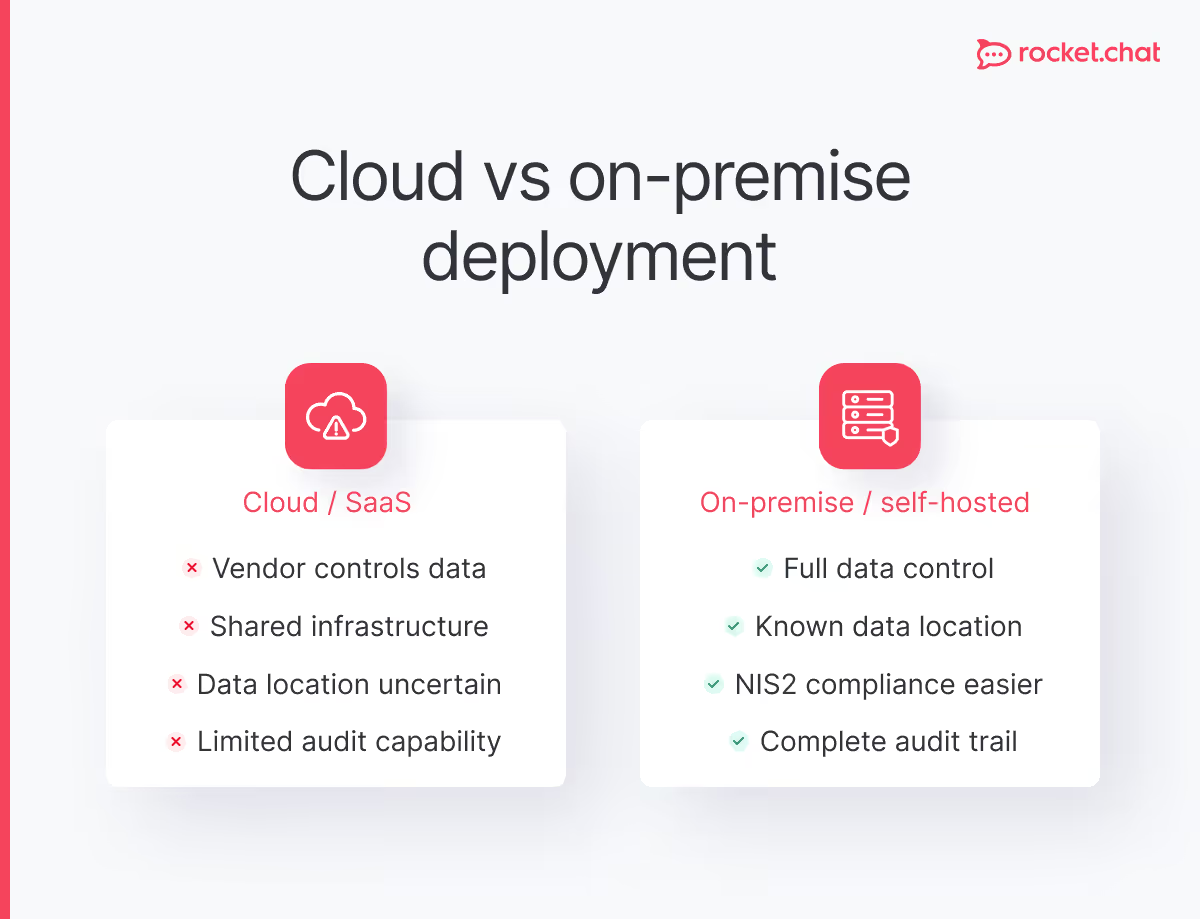
SaaS communication platforms operate on vendor-managed cloud infrastructure. The vendor decides where data is stored, how it is encrypted, and under which legal jurisdiction it falls. For many commercial use cases, this model works. For regulated organisations handling classified, sensitive, or sovereignty-critical communications, it introduces risks that cannot be mitigated through contracts alone.
Self-hosted platforms run inside the organisation's own infrastructure, whether on-premises, in a sovereign cloud, or in an air-gapped environment. The organisation controls encryption keys, access policies, retention rules, and audit logs. No external vendor can access, subpoena, or modify the data without the organisation's knowledge.
This distinction plays out in every procurement decision across regulated sectors. Organisations evaluating secure messaging platforms increasingly treat end-to-end encryption, open-source transparency, and infrastructure ownership as baseline requirements, not differentiators. When the communication channel itself is part of the security perimeter, who controls the infrastructure is not a secondary concern. It is the first question auditors ask.
The jurisdiction problem SaaS platforms cannot solve
The most consequential difference between self-hosted and SaaS communication platforms is legal jurisdiction.
US-headquartered SaaS providers, even those offering EU-hosted instances, remain subject to the CLOUD Act. This law allows US authorities to compel access to data held by American companies regardless of where that data physically resides. GDPR requires organisations to protect EU citizen data from unauthorised foreign access. The CLOUD Act requires US companies to hand it over. These two obligations are structurally incompatible.
For European government agencies, defence organisations, and critical infrastructure operators, this creates an unresolvable compliance conflict when using SaaS platforms from US vendors. Self-hosted deployment eliminates the jurisdiction problem entirely. The organisation owns the infrastructure, controls the legal environment, and can demonstrate sovereign communication to auditors and oversight bodies.
The European Commission's 2025 Digital Decade report confirmed that a substantial portion of governmental digital infrastructure still depends on service providers outside the EU, a dependency that member states are now actively working to reduce.
How self-hosted and SaaS platforms compare across critical requirements
The differences between self-hosted and SaaS communication platforms extend beyond hosting location. They affect every layer of the security and compliance stack.
- Data residency and sovereignty. SaaS platforms typically offer region selection, but the vendor retains administrative access and the data remains under their legal control. Self-hosted platforms give the organisation full custody. For sectors where sovereign communication is a regulatory requirement, this is the deciding factor.
- Compliance and accreditation. Achieving NIS2 compliance, NIST 800-53 alignment, or a national security accreditation requires demonstrable control over the communication environment. SaaS platforms provide shared responsibility models where the vendor handles parts of the stack. Self-hosted platforms put the full stack under the organisation's authority, making formal accreditation achievable on the organisation's own terms. The NIS2 directive requires organisations in 18 sectors to implement rigorous cybersecurity measures, with enforcement audits due by mid-2026.
- Operational resilience. SaaS platforms depend on vendor uptime and internet connectivity. In disconnected, degraded, or contested environments, this dependency becomes a liability. Self-hosted platforms can operate on isolated networks, in air-gapped configurations, or during outages and incidents. For defence and emergency response scenarios, this resilience is not optional.
- Customisation and integration. SaaS platforms offer standardised configurations. Self-hosted platforms can be adapted to specific operational workflows through APIs, extensions, and custom integrations. Organisations running unique communication workflows benefit from the ability to build and govern capabilities within the platform rather than working around vendor limitations.
What NIS2 and GDPR mean for platform selection
Regulatory pressure is accelerating the shift toward self-hosted deployment models across Europe.
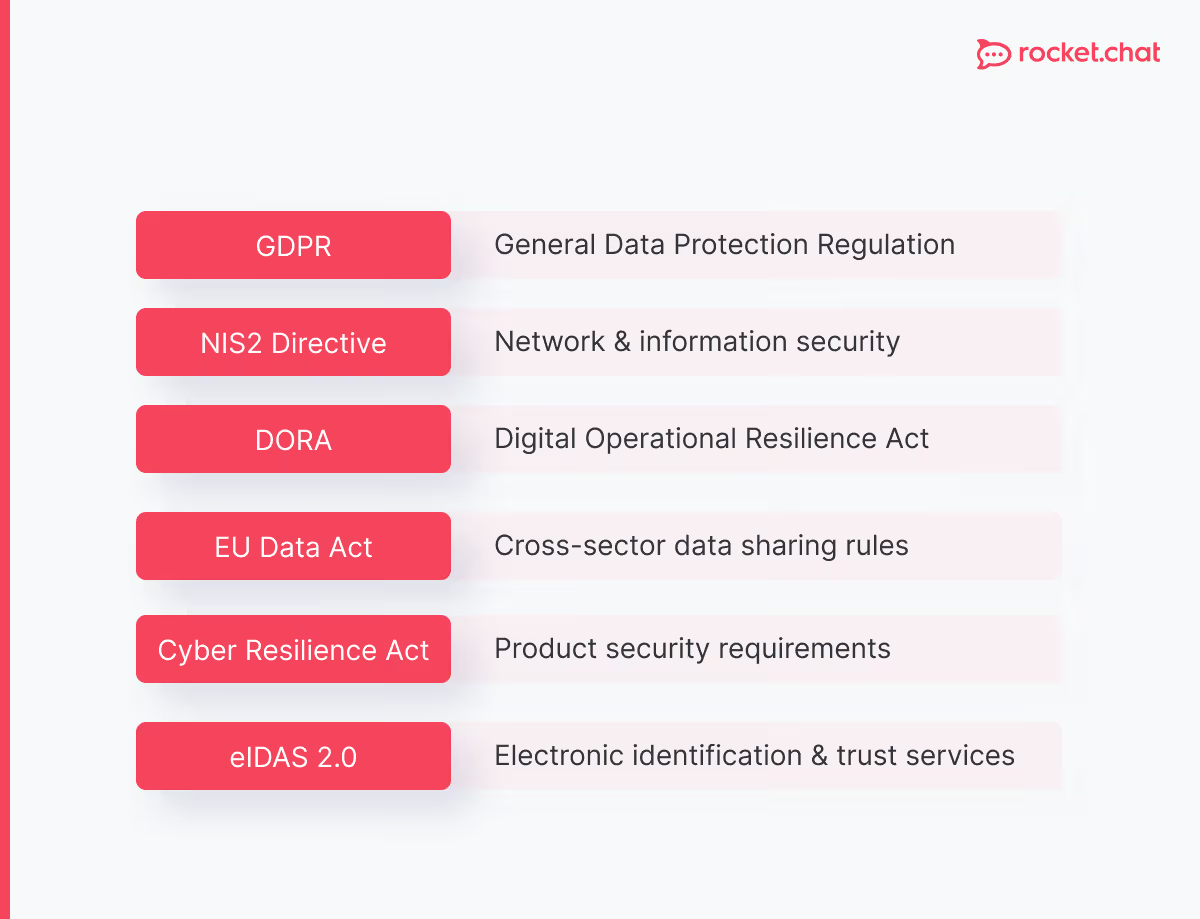
NIS2, which applies to essential and important entities across 18 sectors, requires organisations to implement cybersecurity risk management, incident reporting within 24 hours, and supply chain security assessments. Penalties for non-compliance can reach 10 million euros or 2% of global turnover for essential entities. (Source: ENISA) Senior management is personally liable for failures in cybersecurity governance.
GDPR mandates that organisations demonstrate control over personal data processing, including secure communication channels. When a SaaS provider subject to the CLOUD Act processes EU personal data, the organisation's ability to guarantee GDPR compliance is structurally compromised.
For organisations evaluating chat platforms, the compliance question is straightforward: does the platform enable the organisation to achieve and maintain accreditation independently, or does it create dependencies that auditors will flag?
Why European organisations are choosing self-hosted platforms
The trend is clear: European spending on sovereign cloud infrastructure will grow from $6.9 billion in 2025 to $12.6 billion in 2026, and is expected to reach $23.1 billion by 2027, surpassing North America. (Source: Gartner, via The Register) Government agencies are the primary buyers.
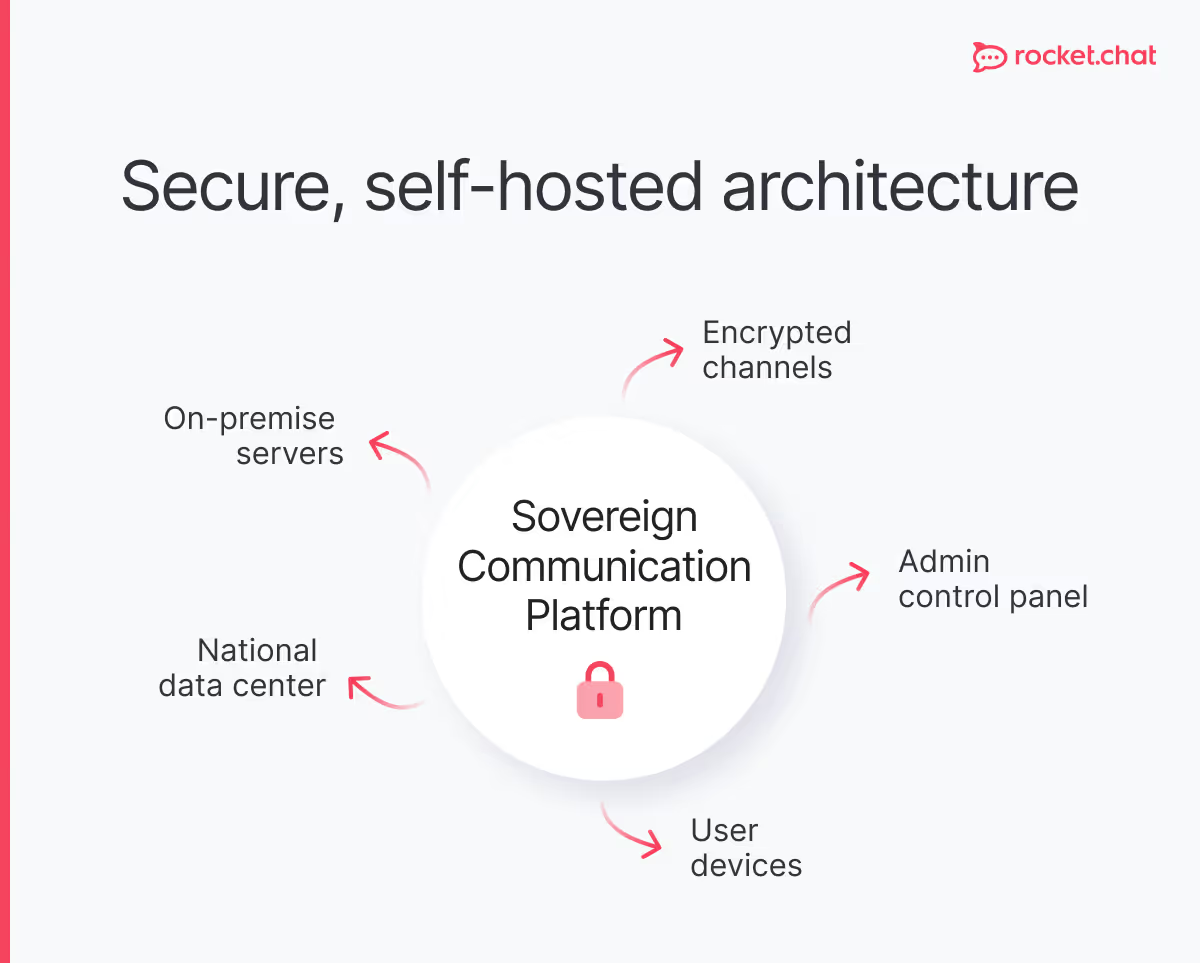
This shift is not driven by preference. It is driven by operational necessity. Organisations that handle classified information, operate in contested environments, or must comply with national security frameworks need communication platforms that operate under their full control. SaaS models, by design, cannot provide this.
Rocket.Chat is built for these requirements. As an open-source, self-hosted secure communication platform, it gives organisations full control over data, infrastructure, and security posture. Deployed across government, defence, and critical infrastructure environments globally, Rocket.Chat supports air-gapped networks, formal accreditation processes, and sovereign collaboration across agencies and allies.
Regulatory and compliance requirements vary by jurisdiction. Organisations should consult their own legal and compliance advisors to determine the specific obligations applicable to their operations.
Frequently asked questions about <anything>
deployment options for regulated industries
What is the main difference between self-hosted and SaaS communication platforms?
Are SaaS communication platforms compliant with GDPR?
Why are European organisations moving to self-hosted communication platforms?
Can self-hosted platforms work in air-gapped or disconnected environments?
How does NIS2 affect communication platform selection?
Is self-hosted communication more expensive than SaaS?
What should regulated organisations look for in a self-hosted communication platform?


- Digital sovereignty
- Federation capabilities
- Scalable and white-labeled

- Highly scalable and secure
- Full patient conversation history
- HIPAA-ready

for mission-critical operations
- On-premise and air-gapped ready
- Full control over sensitive data
- Secure cross-agency collaboration
%201.svg)
- Open source code
- Highly secure and scalable
- Unmatched flexibility

- End-to-end encryption
- Cloud or on-prem deployment
- Supports compliance with HIPAA, GDPR, FINRA, and more

- Supports compliance with HIPAA, GDPR, FINRA, and more
- Highly secure and flexible
- On-prem or cloud deployment